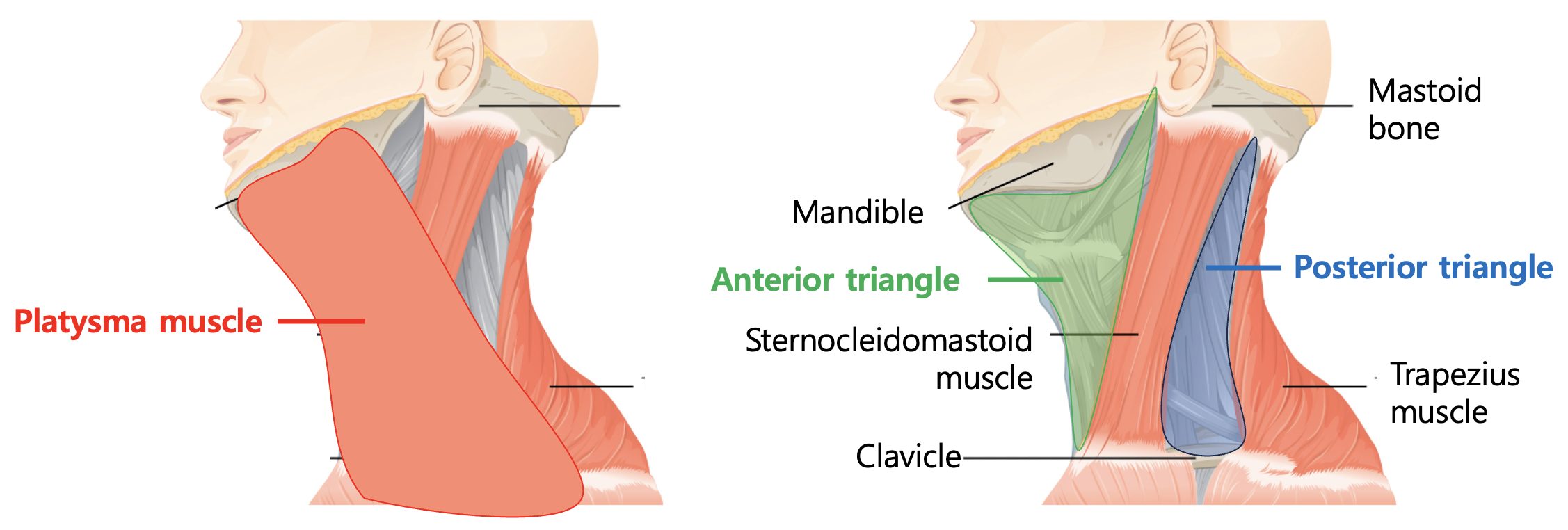
[경부의 근육]
넓은 목근 (Platysma m.)
Mandible부터 upper thoracic region까지 덮고 있는 표재성 근육
경부 외상 평가의 핵심 기준: Platysma 관통 여부에 따라 심부 손상 가능성 판단
앞 삼각부 (Anterior triangle)
경계: SCM m., inferior mandible, midline of neck
주요 구조물: 경동맥(Carotid a.), 내경정맥(Internal jugular v.), 미주신경(Vagus n.), 기도(Trachea), 식도(Esophagus)
뒤 삼각부 (Posterior triangle)
경계: Trapezius anterior surface, SCM posterior surface, middle-third of clavicle
주요 구조물: 척수부신경(Spinal accessory n.), 상완신경총(Brachial plexus), 쇄골하동맥(Subclavian a.)
[Zones of the neck]
Zone I
범위: Clavicles/Sternal notch ~ Cricoid cartilage
특징: 흉곽 입구(Thoracic inlet) 포함, 수술적 접근이 까다로움(Sternotomy 등 필요 가능)
주요 구조물: Subclavian vessels, Proximal carotid a., Lung apices
Zone II
범위: Cricoid cartilage ~ Angle of mandible
특징: 수술적 접근이 가장 용이함, 경동맥 및 기도 손상 흔함
Zone III
범위: Angle of mandible ~ Base of skull
특징: 수술적 접근이 매우 어려움, 뇌신경 손상 및 Distal carotid injury 위험
[1] Sabiston 22e, Chapter 36: Management of Acute Trauma
[2] ATLS 11e (2025), Chapter 22: Penetrating Trauma
Platysma 손상이 없는 경우: 추가적인 검사 필요하지 않음
Platysma 손상이 있는 경우 (=관통성 경부 손상)
Initial resuscitation (ABCDE): 경부는 기관, 식도, 주요 혈관들 (경동맥, 경정맥 등)이 밀도있게 분포하는 부위이므로 손상시 기도, 호흡, 순환에 주요한 영향을 미칠 수 있으며, 가장 중요한 부분은 기도를 확보하는 것이다.
혈역학적 불안정성 혹은 hard signs of vascular / aerodigestive injury 를 보이는 경우
** hard signs: airway compromise, massive subcutaneous emphysema, 상처 사이로 기포가 발생하는 경우, 박동성 혈종, 혈종 크기가 점점 커지는 경우, 활동성 출혈, 신경학적 증상, 토혈
Immediate Neck Exploration (응급 수술적 탐색)
Direct pressure (지속적 압박)
Angioembolization (혈관조영술 및 색전술: 수술적 접근이 어려운 Zone I, III 출혈 시 고려)
혈역학적 안정성을 보이는 경우 : Zone에 따른 처치
Zone 1, 3: CTA neck (CT angiography of neck)
Zone 2: 증상 없는 경우 CTA neck, 증상 있는 경우 즉각적인 수술
** 전통적으로 platysma m.이 손상된 zone II injury 경우 immediate surgical exploration을 시행하도록 권고하였으나, 이제는 혈역학적 불안정성 혹은 hard sign이 보이는 경우만 즉각적인 수술이 필요하며 나머지는 영상학적 검사를 먼저 시행하도록 권고하고 있다.
[1] Sabiston 22e, Chapter 36 (Fig 36.19, 36.20)
[2] ATLS 11e (2025), Chapter 22 & 24
** 제목만 보더라도 어떤 내용인지 알 수 있도록 완성된 문장으로 작성해주세요.
예시) 초음파 (X) → 초음파 사진에서 PDA 소견을 어떻게 알 수 있나요? (O)