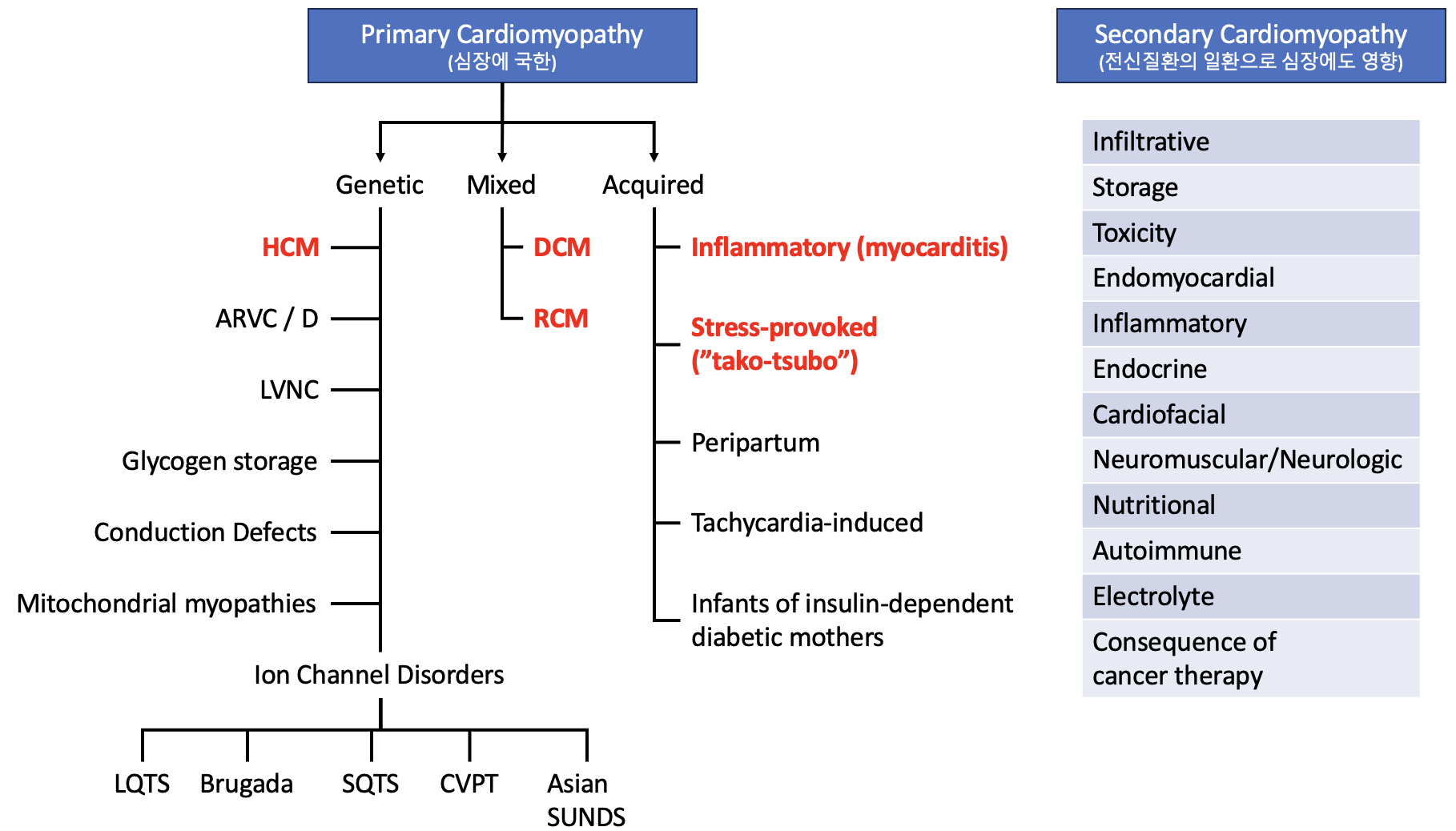
정의: 선천성, 판막 질환, 고혈압, 관동맥 질환, 심낭 질환 등 다른 심장 질환 없이 심장 근육에 이상이 발생하는 여러 질환군. 흔히 유전적 문제로 발생한다.
분류
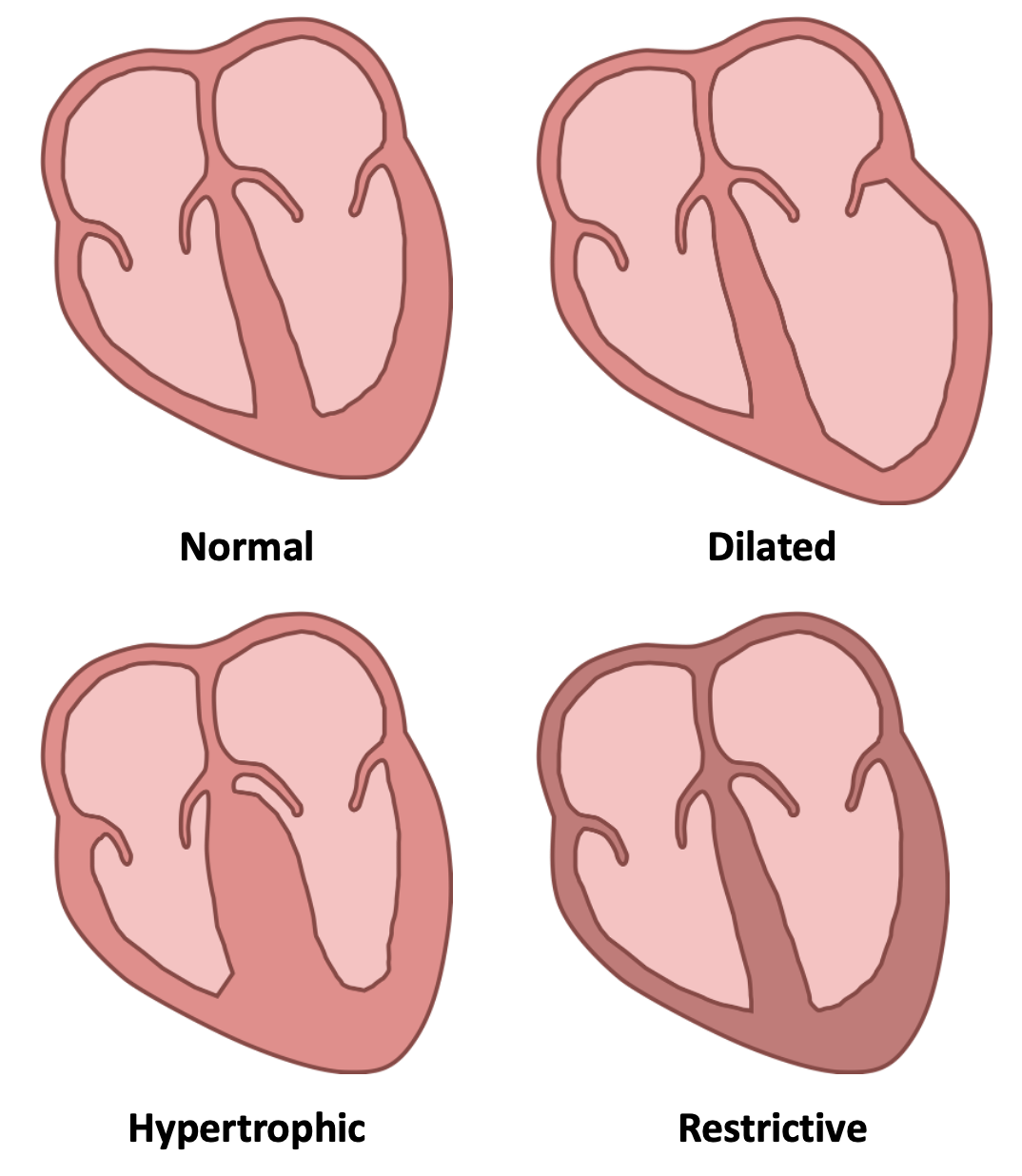
DCM, HCM, RCM 개요
확장성 심근증(Dilated Cardiomyopathy, DCM): “심장이 커짐”
비후성 심근증(Hypertrophic Cardiomyopathy, HCM): “심장이 두꺼워짐”
제한성 심근증(Restrictive Cardiomyopathy, RCM): “심장이 잘 안늘어남”
** Typical Presentation with Symptomatic Cardiomyopathy (출처: Harrison)
DILATED | RESTRICTIVE | HYPERTROPHIC | |
|---|---|---|---|
Ejection fraction (normal >55%) | Usually <30% when symptoms severe | Usually >40-50% | >60% |
Left ventricular diastolic dimension (normal <55 mm) | >60 mm if chronic | <60 mm (may be decreased) | Often decreased |
Left ventricular wall thickness | Normal or decreased | Normal or increased | Markedly increased |
Atrial size | Increased, left before right | Increased; may be massive and involve both atria equally | Increased; related to elevated filling pressures |
Valvular regurgitation | Related to annular and ventricular dilation; mitral appears early during decompensation; tricuspid regurgitation with right ventricular dysfunction | Related to endocardial involvement; frequent mitral and tricuspid regurgitation, rarely severe | Related to valve-septum interaction; mitral regurgitation |
Common first symptoms | Exertional intolerance | Exertional intolerance, fluid retention early, may have dominant right-sided symptoms | Exertional intolerance; may have chest pain |
Congestive symptoms* | Left before right, except right prominent in young adults | Right often dominates | Left-sided congestion at rest may develop late |
Arrhythmias | Ventricular tachyarrhythmia; conduction block in Chagas' disease, and some genetic etiologies. Atrial fibrillation | Conduction disease is common in amyloidosis, in which ventricular arrhythmias are uncommon. Atrial fibrillation is very common | Ventricular tachyarrhythmias; atrial fibrillation |
[1] Harrison 21e, pg.1954-1955
[2] AHA - Contemporary Definitions and Classification of the Cardiomyopathies, pg.1809-1810, 1814
** 제목만 보더라도 어떤 내용인지 알 수 있도록 완성된 문장으로 작성해주세요.
예시) 초음파 (X) → 초음파 사진에서 PDA 소견을 어떻게 알 수 있나요? (O)